
 Facebook
 X
X LinkedIn
 Forward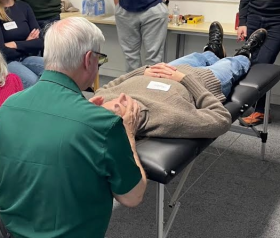
TMJ Assessment and Management Strategies (Including Craniocervical and Pelvic Interrelationships) (Hannah, Oct 3, 2026 Hayward Campus)
Overview
This seminar identifies Temporomandibular Joint Disorders (TMDs) as complex conditions that chiropractors are uniquely qualified to manage through non-invasive, evidence-informed techniques. The program teaches participants how to diagnose and treat TMJ dysfunction by integrating craniocervical and pelvic biomechanics into their clinical protocols. Attendees will gain hands-on skills to address issues like muscular imbalance and disc displacement while developing strategies for essential interdisciplinary collaboration with dental professionals. Ultimately, incorporating these specialized management techniques aims to expand a practitioner's clinical competency and improve holistic patient outcomes for this commonly overlooked condition.
Credits
9 CE hours - 3 History/Exam, 3 Adjustive Technique, 3 General CEs
Schedule
Saturday, October 3, 2026 8:00am - 6:00pm PST.
Bring your own lunch and snacks.
Learning Objectives
By the end of the seminar, participants will be better able to:
- Describe the anatomy and function of the TMJ, including muscular, ligamentous and articular structures.
- Explain the interrelationship between the TMJ and cranial biomechanics.
- Analyze how cervical spine alignment influences mandibular mechanics.
- Perform TMJ specific assessments including deviation patterns.
- Integrate cervical and pelvic postural assessments in TMJ cases.
- Apply chiropractic adjustment techniques for the TMJ.
- Identify dental appliance types and discuss their implications for chiropractic co-management.
Additional Information
| Attachment | Size |
|---|---|
 TMJ Flyer Seminar 2026.pdf TMJ Flyer Seminar 2026.pdf | 425.01 KB |
Course summary
- 9.00 AK Chiropractic BoardAlaska Board of Chiropractic Examiners
- 3.00 CA Chiro Board, Category BCA Board of Chiropractic Examiners, Cat B
- 6.00 CA Chiropractic Board, Category A Exam/Adjust/BillingCalifornia Board of Chiropractic Examiners, Category A Exam/Adjust/Billing
- 9.00 CO Chiropractic BoardColorado Board of Chiropractic Examiners
- 9.00 CT Chiropractic BoardConnecticut Board of Chiropractic Examiner
- 9.00 DC Chiropractic BoardDistrict of Columbia Board of Chiropractic
- 9.00 DE Chiropractic BoardDelaware Board of Chiropractic
- 9.00 IA Chiropractic BoardIowa Board of Chiropractic
- 9.00 ID Chiropractic BoardIdaho Board of Chiropractic Physicians
- 9.00 IN Chiropractic BoardIndiana Board of Chiropractic Examiners
- 9.00 KS Healing Arts BoardKansas Board of Healing Arts
- 9.00 MA Chiropractic BoardMassachusetts Board of Registration of Chiropractors
- 9.00 MD Chiropractic BoardMaryland Board of Chiropractic Examiners
- 9.00 ME Chiropractic BoardMaine Board of Chiropractic Licensure
- 9.00 MN Chiropractic BoardMinnesota Board of Chiropractic Examiners
- 9.00 MO Chiropractic BoardMissouri Board of Chiropractic Examiners
- 9.00 MS Chiropractic BoardMississippi Board of Chiropractic Examiners
- 9.00 MT Chiropractic BoardMontana Board of Chiropractors
- 9.00 NC Chiropractic BoardNorth Carolina Board of Chiropractic Examiners
- 9.00 ND Chiropractic BoardNorth Dakota Board of Chiropractic Examiners
- 9.00 NE Chiropractic BoardNebraska Board of Chiropractic
- 9.00 NH Chiropractic BoardNew Hampshire Board of Chiropractic Examiners
- 9.00 NJ Chiropractic BoardNew Jersey Board of Chiropractic Examiners
- 9.00 NS Chiropractic CollegeNova Scotia College of Chiropractors
- 9.00 NV Chiropractic BoardNevada Chiropractic Physicians' Board
- 9.00 NY Chiropractic BoardNew York State Board for Chiropractic
- 9.00 OH Chiropractic BoardOhio Chiropractic Board
- 9.00 OR Chiropractic BoardOregon Board of Chiropractic Examiners
- 9.00 PACEFCLB Providers of Approved Continuing Education
- 9.00 PR Chiropractic BoardPuerto Rico Board of Chiropractic Examiners
- 9.00 RI Chiropractic BoardRhode Island Board of Examiners in Chiropractic
- 9.00 SC Chiropractic BoardSouth Carolina Board of Chiropractic Examiners
- 9.00 SD Chiropractic BoardSouth Dakota Board of Chiropractic Examiners
- 9.00 UT Chiropractic BoardUtah Chiropractic Physicians Licensing Board
- 9.00 VA Board of MedicineVirginia Board of Medicine
- 9.00 VI Chiropractic BoardU.S. Virgin Islands Board of Chiropractic Examiners
- 9.00 VT Chiropractic BoardVermont Board of Chiropractic
- 9.00 WA Chiropractic CommWashington Chiropractic Quality Assurance Commission
- 9.00 WY Chiropractic BoardWyoming Board of Chiropractic Examiners
07:30 - 08:00 Registration
Participants check in, receive course materials, and settle into the seminar space. This period allows doctors to network and identify shared clinical interests related to TMJ care. It provides the logistical foundation for starting promptly and maintaining flow throughout the day.
08:00 - 09:00 Introduction and Objectives, overview of TMJ dysfunction, prevalence, interdisciplinary significance
This opening session establishes the learning goals, scope, and clinical relevance of TMJ dysfunction. Participants review prevalence, symptom clusters, and why TMJ issues commonly go unrecognized across healthcare disciplines. The emphasis is on understanding the value chiropractors bring to an interdisciplinary approach to TMJ care.
09:00 - 10:00 TMJ Functional Anatomy and Biomechanics; review of pertinent tissues; pathophysiology
Attendees examine the structure and movement of the TMJ, including osseous, muscular, ligamentous, and disc components. The session explains normal arthrokinematics versus the mechanical faults seen in dysfunction. Pathophysiology is tied to patient presentation, linking theory directly to what clinicians palpate and observe.
10:00 - 10:30 Break with Q & A
Participants pause to consolidate learning and clarify emerging clinical questions. Informal discussion deepens understanding of the morning material. The session acts as a reset before progressing into more complex biomechanical concepts.
10:30 - 11:30 Cranial biomechanics and strain patterns; Cervical Posture and TMJ Dysfunction; Pelvic Alignment and Fascial Chains
This hour integrates the TMJ into whole-body mechanics, emphasizing craniomandibular and cervico-mandibular coupling. Participants learn how cranial strain, forward head posture, and pelvic asymmetry can perpetuate TMJ pain and dysfunction. The session reinforces assessment of global kinetic chains rather than treating the jaw in isolation.
11:30 - 12:30 Treatment Protocols; adjustments; soft tissue
Clinicians explore step-by-step TMJ treatment protocols incorporating joint adjustments, mobilization, and myofascial work. Techniques address both local structures—such as masseter, pterygoids, and mandible—as well as associated cervical and cranial tissues. Participants learn how to tailor treatment dosage, sequencing, and response strategies for long-term improvement.
12:30 - 13:30 Lunch Break
A break to rest, refuel, and discuss clinical ideas with peers. Participants integrate morning content through informal reflection. This downtime prepares the group for the hands-on and advanced management sessions ahead.
13:30 - 14:30 Adjunctive therapies; laser; modalities; exercise; lifestyle factors
Participants are introduced to supportive interventions, including laser therapy, ultrasound, taping, and heat/ice application. Home care strategies such as jaw retraining, diaphragmatic breathing, and behavior modification are emphasized. The goal is to give clinicians a broader toolkit for patient-centered, comprehensive management.
14:30 - 15:30 TMJ Specific hands-on technique practice
Attendees transition into guided skill acquisition with live demonstration and supervised practice. The focus is on palpation accuracy, safe joint manipulation, and soft tissue release techniques. Participants begin integrating morning anatomy and assessment concepts into practical treatment delivery.
15:30 - 15:45 Break with Q & A
A short reset for hydration, discussion, and refinement of technical questions. Participants troubleshoot challenges encountered during hands-on labs. This ensures proper comprehension before moving into advanced skill repetition.
15:15 - 16:15 TMJ Specific hands-on technique practice (cont’d)
This lab session reinforces manual skills and introduces more complex or condition specific variations. Participants gain confidence through repetition, clinician-to-clinician feedback, and instructor guidance. Emphasis is placed on achieving clinical fluency for real-world implementation.
16:15 - 17:00 Dental Appliances and Functional Co-Management
Participants are introduced to the role of splints, guards, and orthodontic devices commonly used in TMJ treatment. This session clarifies when to refer to dentistry and how to collaborate without stepping outside scope. The primary objective is understanding how chiropractors and dentists can jointly improve patient outcomes.
17:00 - 17:45 Case Management Scenario Applications and clinical reasoning
Learners apply everything taught to real or simulated patient scenarios. Decision-making flowcharts, red flags, and treatment progression strategies help participants structure care plans. The emphasis is on confidence, critical thinking, and clinical problem-solving.
17:45 – 18:00 — Attendance Quiz
An interactive quiz reinforces key principles covered throughout the seminar. It ensures comprehension and retention while highlighting areas for future study. This final segment provides closure and certifies course completion requirements.
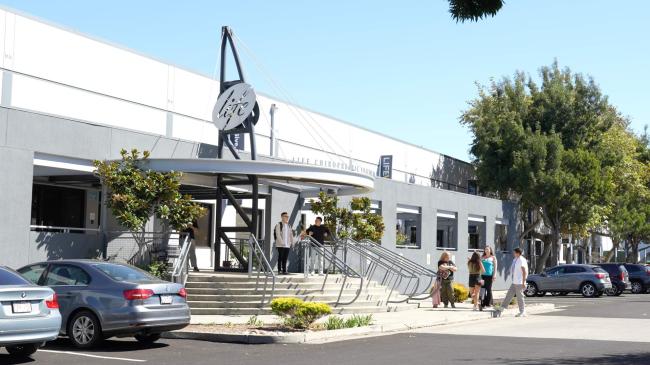
Park by Student Entrance on Clawiter Road side of building, then look for signage directing you to the check-in area.
See Campus Map for details.
 | DAVID W HANNAH, DC, DACO David Hannah was originally from Canada (Ontario) and has lived in The United States, Malaysia and Australia. He graduated from The Canadian Memorial Chiropractic College in 1983 and has practiced in British Columbia, Davenport Iowa USA, Novo Hamburgo Brazil and Australia. He has been involved in chiropractic for 42 years, since 1979. Having completed a Bachelor of Science (B.Sc.) degree in Biochemistry and then pursuing his chiropractic career. Since graduating he has completed a Fellowship of International Academy of Clinical Acupuncture and a Clinical Teaching Resident (CTR); received a Board Certification in Atlas Orthogonal and completed a 3-year Diplomat Program that led to a Fellowship in the Academy of Chiropractic Orthopedist. David’s professional experience started in private practice initially as an associate, then as a self- proprietor which he continued for 12 years before moving to Davenport Iowa to work at Palmer College as an Associate Professor, Staff Clinician. From 1999 – 2003, he was involved in teaching programs and also worked as a clinician and translator for Brazilian Resident Chiropractors. David is familiar with several different chiropractic techniques and has done TMJ assessments, and orthopedic consultations. He has an appreciation of chiropractic knowing that it deals with the whole body, recognizing that chiropractic care acknowledges the ‘whole entity’ he is therefore patient centered and brings a relaxed, low key approach to health care. His many accomplishments are a testament to his desire to give back and share his wealth of knowledge and expertise. |
Life Chiropractic College West has received programmatic accreditation through the Council on Chiropractic Education and institutional/regional accreditation through WASC Senior College and University Commission (WSCUC).
See below for a list of credits that may be available for this seminar.
*The following State and Province boards do not require an application when a program is sponsored by a college accredited by the Council on Chiropractic Education (CCE): CO, CT, DE, DC, ID, IL, IA, MD, MA, MI, MT, NE, NH, NJ, OR, RI, SC, UT, VT, VA, WA, WY, BC, NB, ON, QC. Life Chiropractic College West cannot guarantee that these licensing board(s) will accept any session of this offering. Life West urges licensees to familiarize themselves with the laws governing continuing education in the jurisdictions where they hold licensure.
Available Credit Hours
- 9.00 AK Chiropractic BoardAlaska Board of Chiropractic Examiners
- 3.00 CA Chiro Board, Category BCA Board of Chiropractic Examiners, Cat B
- 6.00 CA Chiropractic Board, Category A Exam/Adjust/BillingCalifornia Board of Chiropractic Examiners, Category A Exam/Adjust/Billing
- 9.00 CO Chiropractic BoardColorado Board of Chiropractic Examiners
- 9.00 CT Chiropractic BoardConnecticut Board of Chiropractic Examiner
- 9.00 DC Chiropractic BoardDistrict of Columbia Board of Chiropractic
- 9.00 DE Chiropractic BoardDelaware Board of Chiropractic
- 9.00 IA Chiropractic BoardIowa Board of Chiropractic
- 9.00 ID Chiropractic BoardIdaho Board of Chiropractic Physicians
- 9.00 IN Chiropractic BoardIndiana Board of Chiropractic Examiners
- 9.00 KS Healing Arts BoardKansas Board of Healing Arts
- 9.00 MA Chiropractic BoardMassachusetts Board of Registration of Chiropractors
- 9.00 MD Chiropractic BoardMaryland Board of Chiropractic Examiners
- 9.00 ME Chiropractic BoardMaine Board of Chiropractic Licensure
- 9.00 MN Chiropractic BoardMinnesota Board of Chiropractic Examiners
- 9.00 MO Chiropractic BoardMissouri Board of Chiropractic Examiners
- 9.00 MS Chiropractic BoardMississippi Board of Chiropractic Examiners
- 9.00 MT Chiropractic BoardMontana Board of Chiropractors
- 9.00 NC Chiropractic BoardNorth Carolina Board of Chiropractic Examiners
- 9.00 ND Chiropractic BoardNorth Dakota Board of Chiropractic Examiners
- 9.00 NE Chiropractic BoardNebraska Board of Chiropractic
- 9.00 NH Chiropractic BoardNew Hampshire Board of Chiropractic Examiners
- 9.00 NJ Chiropractic BoardNew Jersey Board of Chiropractic Examiners
- 9.00 NS Chiropractic CollegeNova Scotia College of Chiropractors
- 9.00 NV Chiropractic BoardNevada Chiropractic Physicians' Board
- 9.00 NY Chiropractic BoardNew York State Board for Chiropractic
- 9.00 OH Chiropractic BoardOhio Chiropractic Board
- 9.00 OR Chiropractic BoardOregon Board of Chiropractic Examiners
- 9.00 PACEFCLB Providers of Approved Continuing Education
- 9.00 PR Chiropractic BoardPuerto Rico Board of Chiropractic Examiners
- 9.00 RI Chiropractic BoardRhode Island Board of Examiners in Chiropractic
- 9.00 SC Chiropractic BoardSouth Carolina Board of Chiropractic Examiners
- 9.00 SD Chiropractic BoardSouth Dakota Board of Chiropractic Examiners
- 9.00 UT Chiropractic BoardUtah Chiropractic Physicians Licensing Board
- 9.00 VA Board of MedicineVirginia Board of Medicine
- 9.00 VI Chiropractic BoardU.S. Virgin Islands Board of Chiropractic Examiners
- 9.00 VT Chiropractic BoardVermont Board of Chiropractic
- 9.00 WA Chiropractic CommWashington Chiropractic Quality Assurance Commission
- 9.00 WY Chiropractic BoardWyoming Board of Chiropractic Examiners
Price
Changes and Refunds
Every attempt is made to offer Life West CE programs as announced. However, Life West reserves the right to adjust program faculty, locations, dates, times, and tuition to accommodate unanticipated occurrences and to cancel programs owing to insufficient enrollment, illness, or other factors. Life West will notify advance registrants of any cancellations or significant program changes. Life West is not responsible for any expenses registrants incur due to adjustments or cancellations. Refer to the link below for more information.